Analysis and prediction of financial risks, such as market and credit risks, is one of the central problems in modern economy. An adequate understanding of the available risk data requires advanced mathematics and refined high performance numerical algorithms. A pilot study carried out at the Institute for Computational Science at the University of Lugano (USI) [...]
Escape response of small fish tested using a supercomputer
Small fish bend themselves into a ‘C’ shape before they flee from predators. Observations have suggested that this shape helps them to abruptly put the greatest distance possible between themselves and their predators. Petros Koumoutsakos, a professor at the Computational Science & Engineering Laboratory » at ETH Zurich, and two of his doctoral students, Mattia [...]
Solving the Mystery of Neanderthal Man in the Supercomputer
CSCS is reporting on how supercomputers can explain why Homo neanderthalensis disappeared about 15,000 years ago. At that time modern humans, Homo sapiens, came to Europe and Homo neanderthalensis disappeared for good. Now the supercomputer is to assess which of the current hypotheses can explain their extinction. 20,000 to 200,000 years before our time, with [...]
First Realistic Simulation of How an Oceanic Plate Sinks of its Own Accord Under an Adjacent One
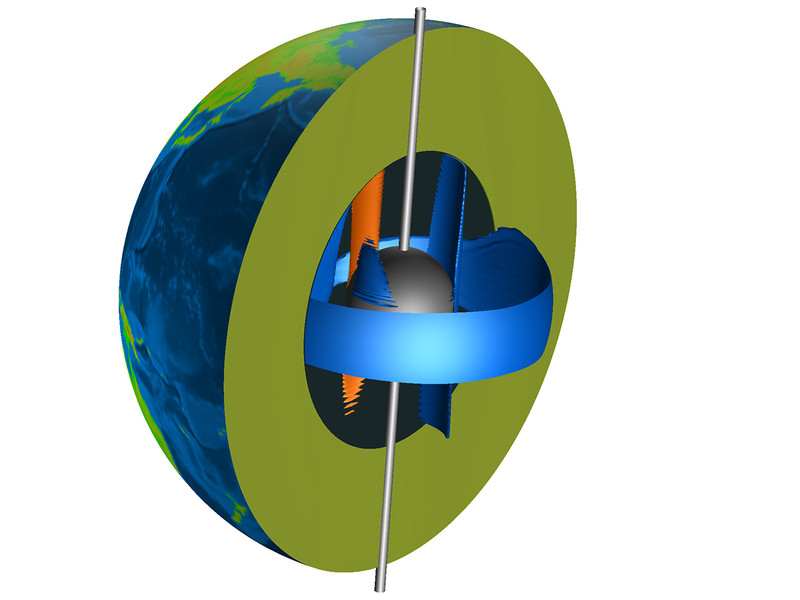
CSCS just reported that ETH Zurich scientists have for the first time succeeded in realistically simulating how an oceanic plate sinks of its own accord under an adjacent plate. At the same time the scientists showed why only one of the plates rather than both subducts into the Earth’s mantle, and how this process affects [...]
Eliminating Errors in Quantum Computing
Quantum computers, should they be realized one day, will inevitably make errors. Therefore, they need special error correcting mechanisms. The most important part of it, a so-called Toffoli gate, has now been realized by ETH scientists with superconducting circuits. In a classical computer there happens one error in about ten quadrillion (1016) operations. The goal [...]